Start early
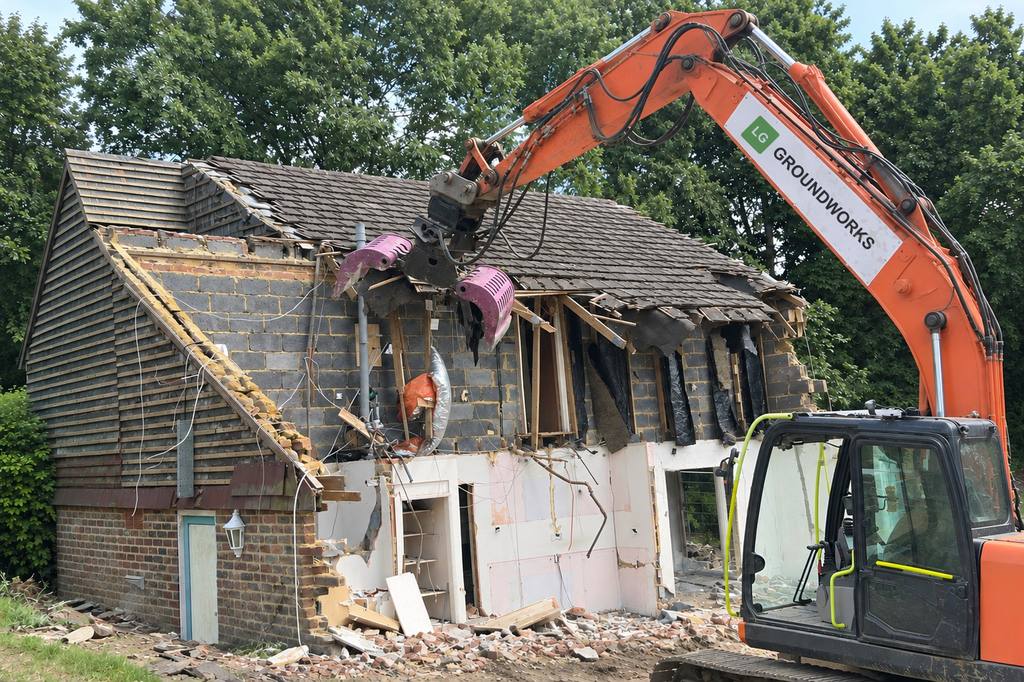
Demolition itself is quick. What takes time is the paperwork and the utility companies — so start those as soon as you know a building is coming down.
1. Check whether you need planning consent
Demolishing a house usually needs prior approval from the council rather than full planning permission. In conservation areas, for listed buildings or where an Article 4 direction applies, you may need full permission. Your architect or the council’s planning team will confirm.
2. Book an asbestos survey
Any building built before 2000 may contain asbestos. The HSE expects a refurbishment and demolition survey before work starts, and asbestos-containing materials must be removed as far as reasonably practicable before demolition. Licensed asbestos work must be done by a licensed contractor.
3. Give the Section 80 notice
Under the Building Act 1984 you normally have to tell the council before demolishing a building, sending copies to neighbours and the gas and electricity suppliers. Buildings of 50 m³ (about 1,750 cubic feet) or less are exempt. The council can take up to six weeks to respond.
4. Get the services disconnected
Gas, electricity, water and telecoms have to be disconnected by their suppliers — not by the demolition contractor. Lead times can be several weeks. We check everything is dead and capped before we start.
5. Think about neighbours
If the building is attached, or you’ll be digging near a neighbour’s foundations, the Party Wall etc. Act 1996 may apply. Tell the neighbours what’s happening and when.
6. Plan what comes next
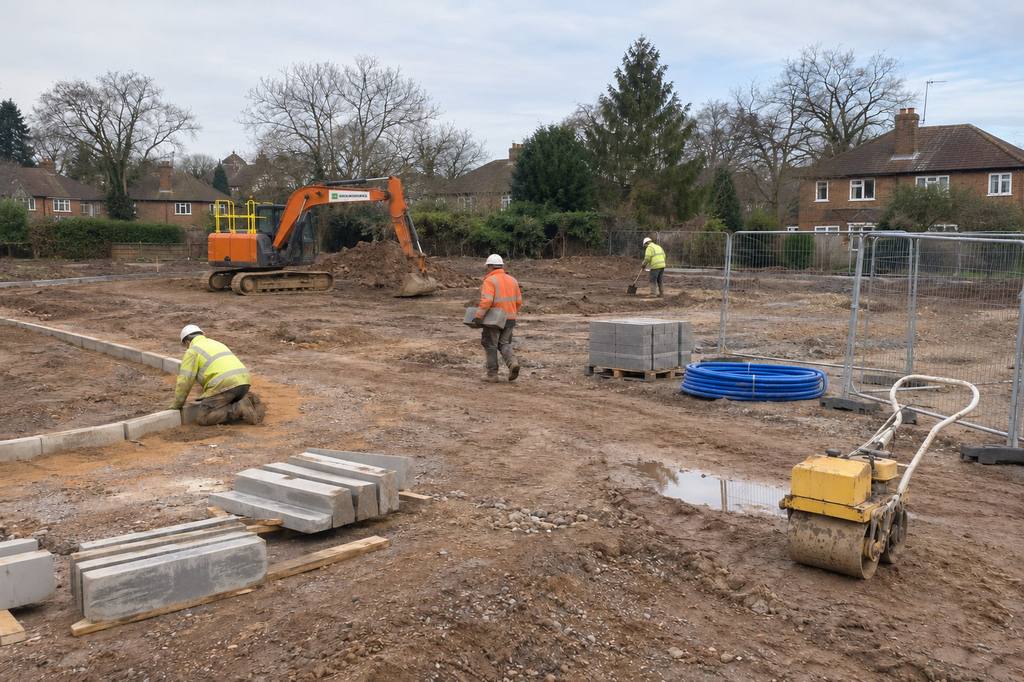
If a new building is going up, plan the groundworks at the same time. Having one team demolish, clear, dig and pour avoids a gap between contractors — see demolition.
Rules change and every property is different. Your architect, surveyor or the council has the final word on what applies to you.