Why clay and trees matter
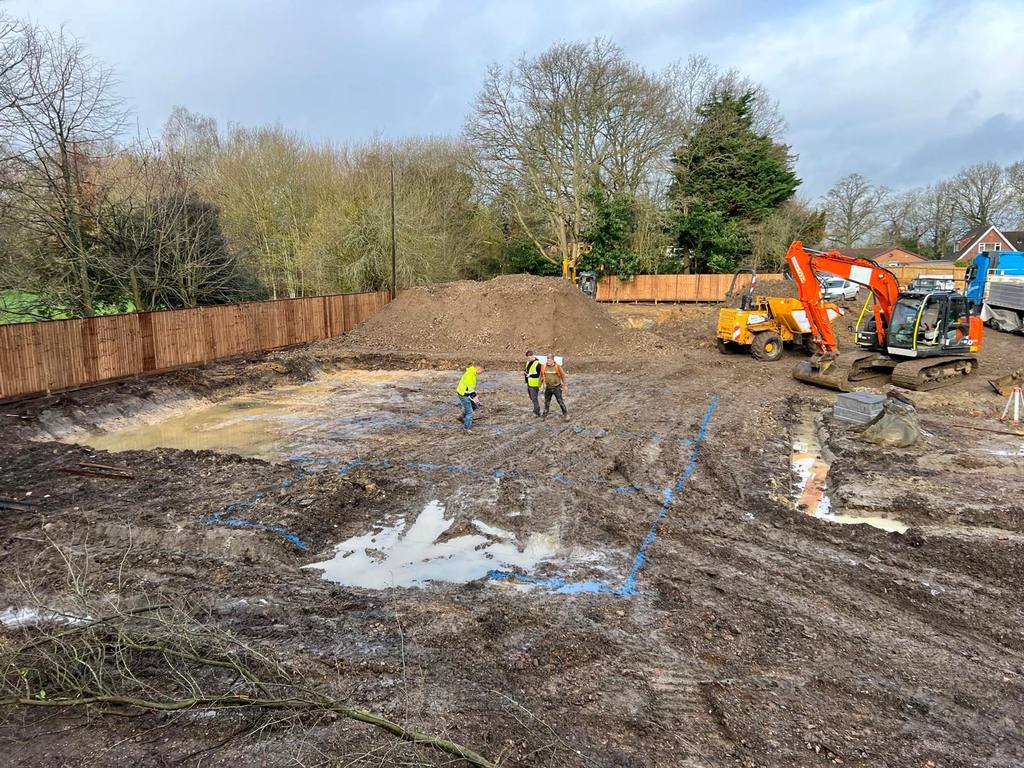
Much of Surrey north of the Downs sits on London Clay, and there’s more clay to the south in the Weald and Gault. Clay shrinks when it dries and swells when it gets wet. Trees and big shrubs draw a lot of water out of the ground in summer, so the clay around them shrinks — and if a foundation sits in that zone, the building moves with it.
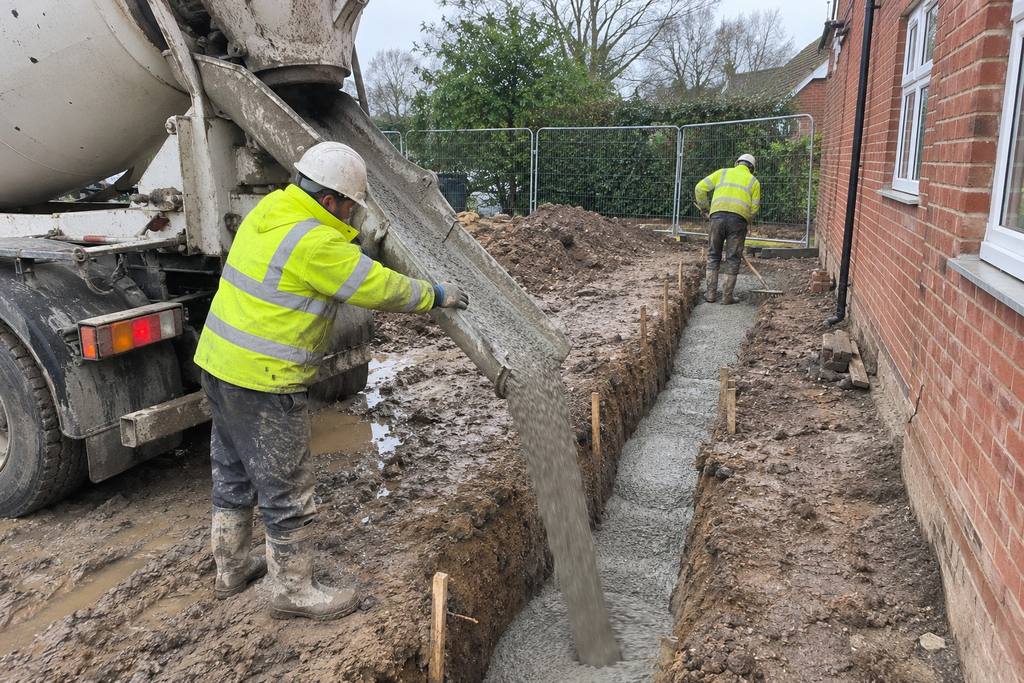
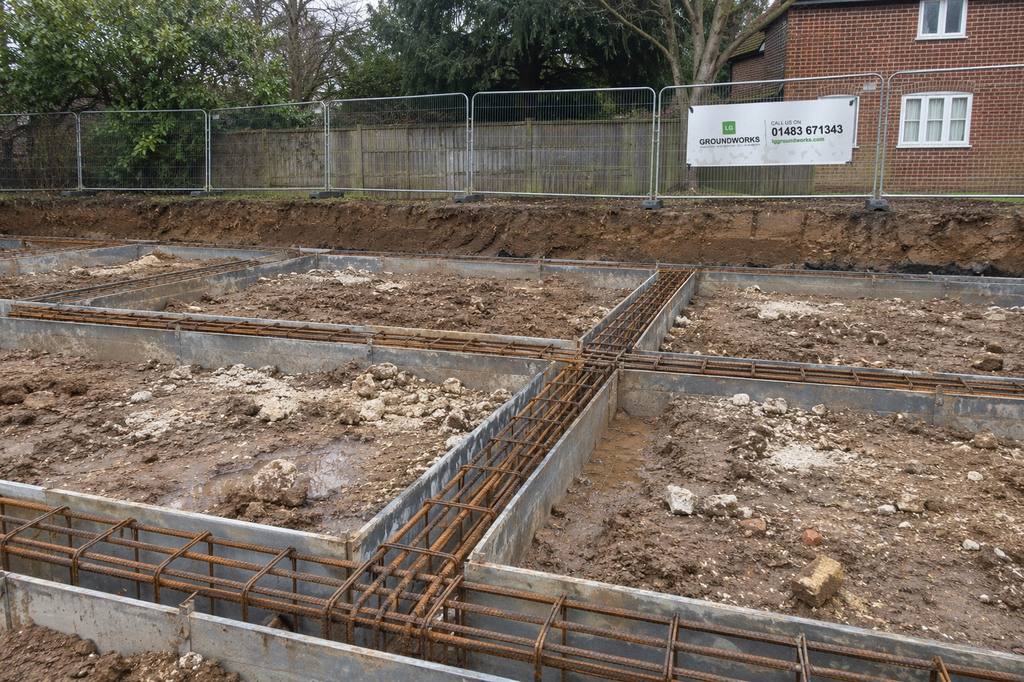
The answer is to put the foundation below the depth where the ground moves. That’s why extensions in clay areas often need trench-fill a metre or more deep, and much deeper close to large trees.
How deep is “deep enough”?
Building Regulations guidance (Approved Document A) gives minimum depths for strip foundations:
- 0.45 m on non-shrinkable ground (to get below frost)
- 0.75 m on low-shrinkage clay
- 0.9 m on medium-shrinkage clay
- 1.0 m on high-shrinkage clay
Near trees the depth goes up again, based on the type of tree, its mature height, how far it is from the foundation and how shrinkable the clay is. Warranty providers such as NHBC (chapter 4.2) and LABC publish the tables engineers use. If the clay’s shrinkability hasn’t been tested, the LABC manual says to assume 1.0 m minimum.
Taking a tree out can be as damaging as leaving it: the clay slowly rehydrates and swells (“heave”). Foundations near recently felled trees are designed for it.
When trench-fill stops making sense
As depths increase, trench-fill gets expensive and harder to dig safely. Warranty guidance says that beyond about 1.5 m, foundations need heave protection on the inside faces, and beyond about 2–2.5 m an engineer will usually design a piled solution with ground beams instead. Your structural engineer makes that call — our job is to build what they design and flag early if the ground isn’t what was expected.
What to do before you dig
- Note every tree and large hedge within about 30 m of the new building, including ones on neighbouring land and ones removed in recent years.
- Get a trial hole or soil test so the clay’s shrinkability is known, not guessed.
- Let your engineer design the foundations from that information.
- Ask your groundworker to price extra depth at an agreed rate, in case building control asks for more on the day.
See also our guide to foundation types and our foundations service.